From Medical School to Innovation: Dr. Katherine McMackin's Journey in Vascular Surgery and Entrepreneurship
When Katherine McMackin, MD’16, entered Cooper Medical School of Rowan University (CMSRU), she thought she would leave behind her interest in medical innovation and focus solely on clinical practice. The CMSRU Charter Class alumna returned to campus on June 1 as part of the new Medical Innovation and Entrepreneurship Distinguished Speaker Series to share her journey from medical student to vascular surgeon, entrepreneur, and co-founder and CEO of Upstream Access, Inc.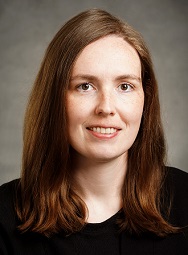
Despite preparing to be a full-time clinician, McMackin couldn’t keep her innovation instincts at bay once she was in the operating room. During her residency at Cooper University Hospital, she repeatedly encountered a challenge in vascular surgery. Existing vascular surgery tools are designed to travel in a single direction from one access point, while many vascular conditions require physicians to reach multiple areas of disease. As a result, surgeons often must choose between additional access points, additional procedures, or more complex workarounds, each adding time, risk, or cost.
As an undergraduate, McMackin studied Greek and Roman Civilizations with the goal of attending law school. Interested in the intersection of science, innovation and law, she planned to pursue patent law and went on to earn a master of science degree in biotechnology. During those graduate studies, however, she worked alongside physicians and found herself increasingly drawn to clinical practice.
“I thought this innovation thing was a nice moment in my life, but my real work would be in clinical practice,” McMackin shared in her talk.
She enrolled as a member of the CMSRU Charter Class. “When we arrived, there were no affinity groups, there were no service-learning sites,” McMackin recalled of her early days at CMSRU. “If you wanted to do something, you had to go out and figure out how to do it.” McMackin credits the entrepreneurial mindset she developed as a member of CMSRU’s Charter Class with helping her view the challenge differently when she later encountered a complicated patient during residency.
Alongside her mentor, Jeffrey Carpenter, MD, professor and retired chair of surgery, she began asking a simple question: is there a way to guide wires and instruments in two directions through a single access point? Those conversations quickly turned into sketches. They would take pictures of their ideas and text them back and forth. Looking back, McMackin emphasized documenting those early steps. “The earliest steps cost almost nothing, but they protect everything that comes after,” she said.
McMackin and Carpenter, co-founders of Upstream Access, Inc., then approached the Cooper Innovation Center, where they began building a team, securing a provisional patent, and eventually receiving a $100,000 grant from the New Jersey Health Foundation (NJHF) in 2023. With that support, they built and tested their first prototype.
It didn’t work.
McMackin was encouraged to attend the National Science Foundation Innovation Corps to learn how to translate her ideas into a device that could succeed in real-world settings. Finding time to participate in the seven-week experiential training program required some creativity. “Clinical work expands to fill every available hour. Block the calendar for the company,” she advised students, drawing on her own experience. At the time, McMackin was on maternity leave with her second child. She attended over Zoom while caring for her newborn, listening, asking questions, and rethinking her design.
Earlier this year, Upstream Access entered into a licensing agreement with the Cooper Innovation Center and secured an initial $500,000 investment from the Foundation Venture Capital Group, an affiliate of the NJHF. The device is not ready for market, but development has continued steadily since those initial conversations and sketches during her residency. The team is now working toward a design freeze by fall 2026, with FDA testing to follow.
McMackin encouraged students to embrace curiosity, seek mentors, and begin noticing problems now. Innovation, she emphasized, does not require waiting until training is complete. It begins by paying attention to unmet needs and taking the first step toward addressing them. More than anything, though, she stressed the importance of keeping patients at the center of the work. The patient who first inspired her idea returns to her office every six months for follow-up. Each visit brings the same thought: “I don’t have this device ready for you – yet.” It’s a reminder of why she keeps working to get it right.
## The Medical Innovation and Entrepreneurship Distinguished Speaker Series brings together physicians and engineers to highlight the journey of translating medical devices from ideation to commercialization while building a community of current and future physician-innovators. The series is sponsored by the Medical Engineering, Innovation, and Entrepreneurship Club and was developed in collaboration with Mark Byrne, PhD, senior associate dean and executive director for medical innovations programs.